


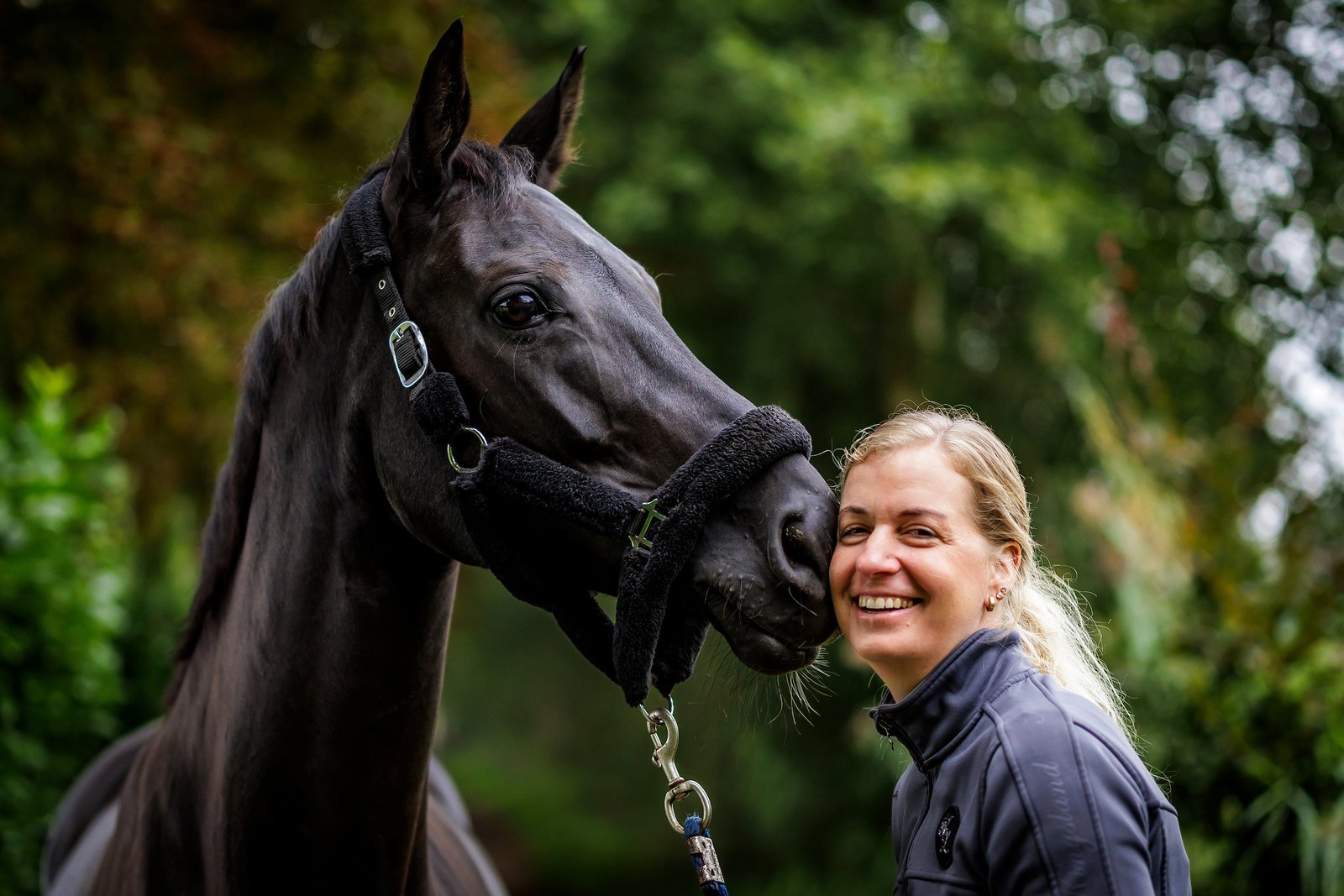
Helen Brandt, Grade IV

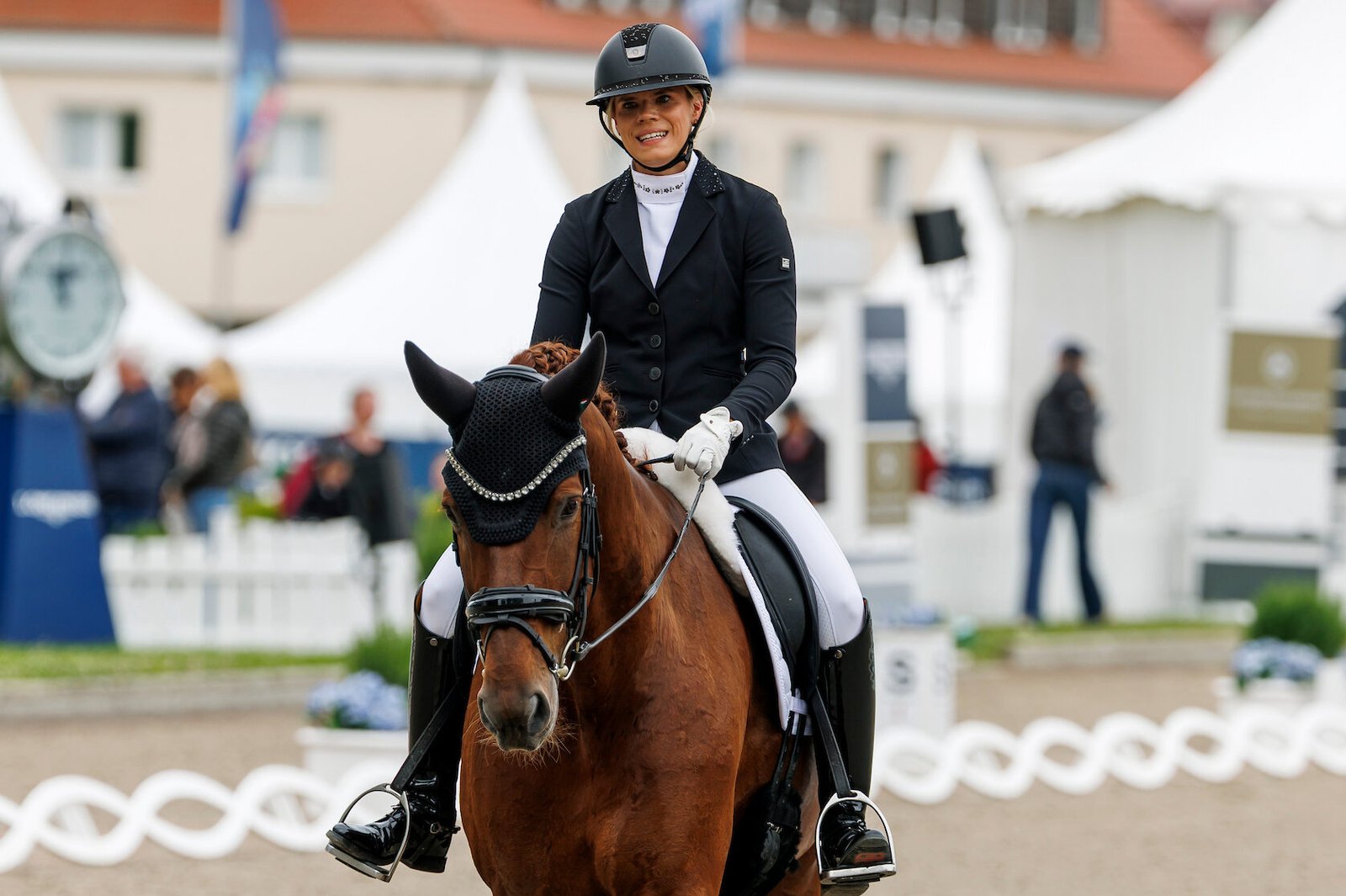
Helen Brandt and Vulkan Vegas Photo: sportfotos-lafrentz.de
Even as a child, Helen Brandt knew one thing for sure: she wanted to compete for Germany, just like Isabell Werth. As a five-year-old, she watched the rider—who has since become the world’s most successful equestrian—on TV, knew about her championship horse Gigolo, and dreamed of achieving the same one day. Her dream is coming true—though not quite the way she imagined. The Dortmund native competes for Germany as part of the German para-dressage team.
Helen Brandt, née Schildhauer, born in 1998, was introduced to equestrian sports at an early age. As a child, she rode ponies and got her very first horse at the age of nine. Rose is a Westphalian mare, a show jumper, and she showed the young rider just what was possible.
The dream of dressage…
Her first successes—albeit in
the arena
—came four years later with Rosalie, a Hanoverian mare standing 1.70 meters tall. The mare becomes Helen’s favorite horse. Together, they compete in the Westphalian U14 Tour, consistently placing in the top ten and finishing fourth overall at their very first Westphalian Championship.
At age 19, she began training her friend’s KWPN mare in dressage. A dream horse that Helen actually wanted to ride up to the S level. But the mare had trouble achieving a high degree of collection and ultimately had to be taken out of competition entirely. This happened three months before Helen ended up in a wheelchair within a matter of weeks.
… takes a back seat
“I think the first warning sign came when I was 18. I suddenly felt really sick. No one knew what was wrong. I lost weight, was constantly throwing up, and then ended up in the hospital,” Brandt says. In the hospital, she suffered multiple organ failure. “It was really a close call,” saysthe rider. After a few weeks, her condition improved, and she was allowed to go home. No cause could be found at the time, but this episode seems to have been just the beginning of what was to follow two years later.
In her early 20s, Helen’s left leg begins to tingle; it becomes slightly numb, and she has almost no sensation left. Her parents are doctors. They suspect a herniated disc, since their daughter not only rides horses but is also very active in sports in general. But when her right leg also starts to go numb, Helen undergoes a thorough examination. Just as with her first hospital stay, nothing is found. Instead, her health rapidly deteriorates once again. Within a few weeks, Helen is in a wheelchair and can barely move her legs.
The diagnosis is vague: porphyria—an extremely rare metabolic disorder that can lead to severe paralysis. Her first, dramatic hospital stay was likely related to this as well. Helen is given medication and hydrocortisone, which prove effective. The paralysis isn’t getting any worse. She has to change her diet, largely cutting out sugar and fat to avoid triggering the condition.
And she’s fighting. For months, she’s been training her coordination and strength; Helen is determined to be able to walk again. With a lot of patience, she finally manages to get out of her wheelchair; she can take her first steps, but she has trouble controlling the muscles in her left leg in particular.
Horseback Riding as a Lifeline
One of her therapists also rides and encourages her to get back on a horse. Helen agrees, even though her parents have reservations because of her disability. Helen does what kids do: She doesn’t tell her family anything before her first ride. But after just a few hours on horseback, she notices the difference: The horses are good for her mind and her muscles. Her posture improves, and her muscles are strengthening on the left side as well. Now she has a goal: to ride again!
Little by little, she fights her way back into the saddle, alongside her nursing training and subsequent medical studies. For Helen, it’s clear that she won’t give up. Through a former trainer, she was introduced to para-dressage and to Rolf Grebe, the team’s assistant national and youth coach. Her new equestrian journey began.
Dressage, but with a twist
“I didn’t want a chestnut, an auction horse, or—certainly not—a mare,” Helen laughs. But the prices for well-trained dressage horses have been astronomically high for years, and Helen and her parents can’t find anything that’s affordable. So in 2022, she decided to go to a Westphalian auction. There, she happened to meet Melanie Wienand, a former auction rider who would go on to become the 2025 European champion in para-dressage with the team. She recommended Helen Federweiß, a four-year-old chestnut mare by For Final-L’espoir. “We clicked right away. This horse immediately adapted to my disability, and I instantly felt that she was looking out for me,” smiles Helen Brandt.
Fedi—as Helen affectionately calls her mare—moves in with her, and together they win over Rolf Grebe after a few years. In 2024, Helen was accepted into the junior national team, and in 2025, she made her debut at the German Championships. There, however, she didn’t ride Fedi, but rather Willi, her second new addition.
“Willi came to me because Federweiß had been injured. But I was determined to keep going, and Ann-Christin Wienkamp recommended Willi to me. He’s also a chestnut, but simply gorgeous.” Willi’s real name is Vulkan Vegas IB; he’s also a Westphalian by Vitalis-Arpeggio. At 1.75 meters at the withers, he’s slightly taller than Federweiß. But the eight-year-old is expected to lay the groundwork for a successful 2026 season.
With him, Helen Brandt is off to a flying start this season. She’s already racked up victories in Mannheim in Grade V and was the German runner-up in the combined Grade IV/V disciplines in Balve. And at the most recent tryouts in Stadl Paura, she surprised everyone with strong scores. She’s over the moon: “I can’t believe it. It’s indescribable that I now get to compete for the German team at the World Championships in Aachen.”
World Cup Instead of a Honeymoon
Not only in sports has 2026 been going perfectly so far for the Dortmund native. In May, she’ll marry Oliver, the love of her life. The honeymoon is on hold for now, as she’s focusing on preparing for Aachen instead. There, she’ll compete in Grade IV, as her athletic capabilities were reassessed due to her physical limitations. “I’m incredibly proud of what I’ve achieved so far. Of course, now I’m hoping that, together with the team, I can achieve as much as possible.” And then there are the 2028 Paralympics in L.A. Helen could make it and follow in the footsteps of her great role model, Isabell Werth, if she secures a spot.
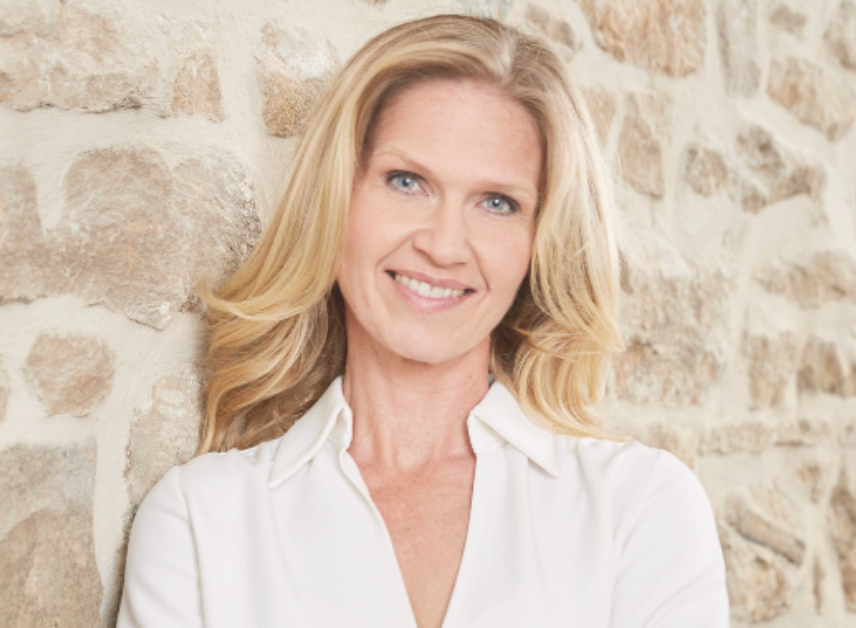
Kerstin von Linden is a journalist and author who works for WDR, among others, and volunteers for the German Board for Therapeutic Riding (DKThR). Photo: kerstinvonderlinden.de


EQUI PAGES & Cookies
Funktional
Always active
Die technische Speicherung oder der Zugriff ist für den legitimen Zweck, die Nutzung eines bestimmten, vom Teilnehmer oder Benutzer ausdrücklich angeforderten Dienstes zu ermöglichen, oder für den alleinigen Zweck der Durchführung der Übertragung einer Nachricht über ein elektronisches Kommunikationsnetz unbedingt erforderlich.
Preferences
The technical storage or access is necessary for the legitimate purpose of storing preferences that are not requested by the subscriber or user.
Statistiken
The technical storage or access that is used exclusively for statistical purposes.
Die technische Speicherung bzw. der Zugriff erfolgt ausschließlich zu anonymen statistischen Zwecken. Ohne Vorladung, freiwillige Zustimmung Ihres Internet-Service-Providers oder zusätzliche Aufzeichnungen Dritter können die zu diesem Zweck gespeicherten oder abgerufenen Informationen in der Regel nicht dazu verwendet werden, Sie zu identifizieren.
Marketing
The technical storage or access is required to create user profiles to send advertising, or to track the user on a website or across several websites for similar marketing purposes.