


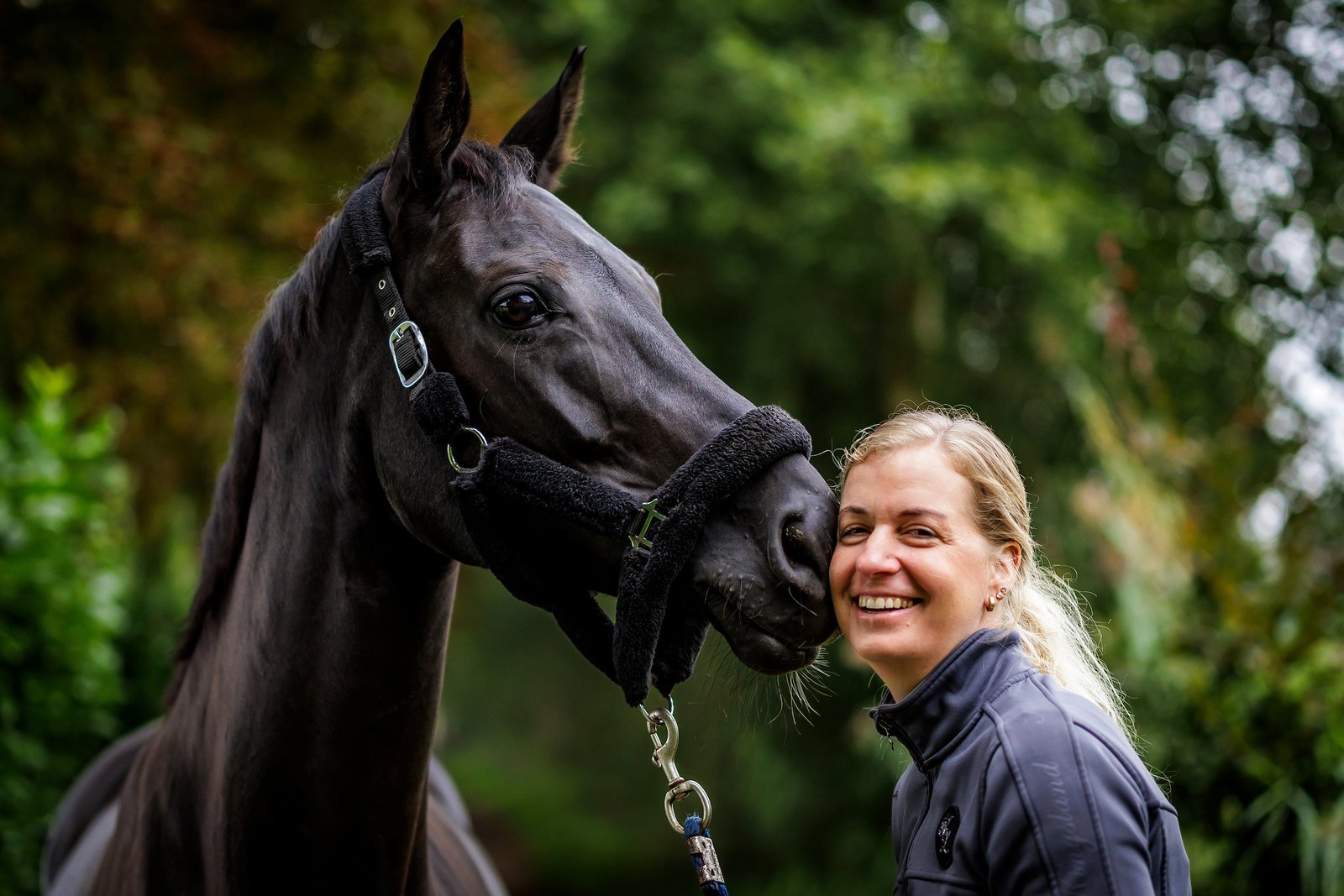
Regine Mispelkamp, Grade V



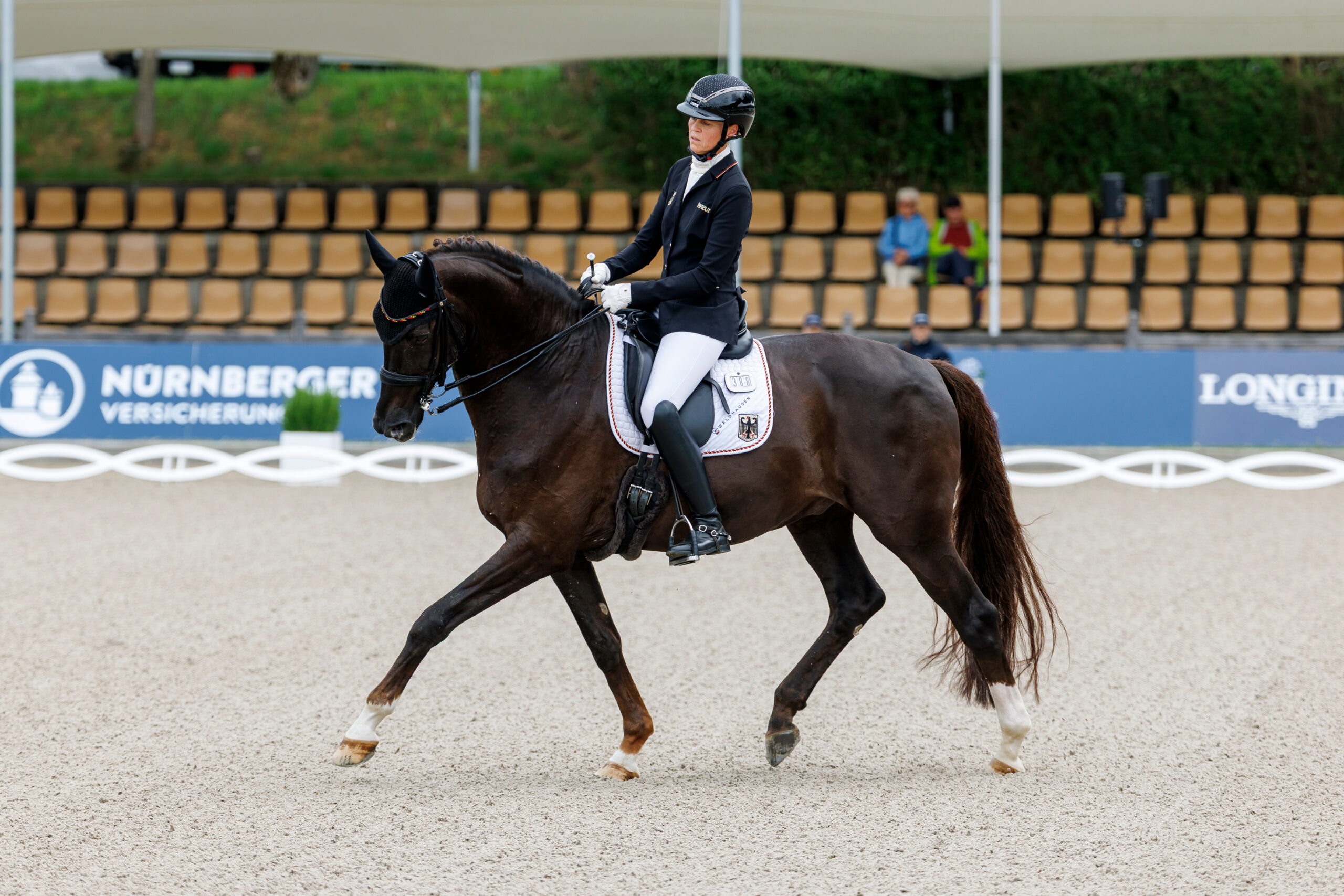
Regine Mispelkamp with Highlander Delight's. Photo: sportfotos-lafrentz.de
It takes a lot to rattle Regine Mispelkamp. Anyone who visits her farm in Kerken, in the Lower Rhine region, will meet a relaxed, friendly European champion and multiple Paralympic medalist in para-dressage. Her successful horses, training horses, and competition horses stand in a brightly lit stable aisle. Mispelkamp is a horse person through and through.
Horseback riding is, so to speak, in the blood of this 55-year-old. Regine Mispelkamp was already riding a pony at the age of three; she later rode her parents’ full-size horses and began competing very early on. Her specialty is show jumping, in which she competed successfully at the Westphalian Junior Championships and later at the Young Riders Championships. She trains regularly with Paul Schockemöhle, Franke Sloothaak, and Ludger Beerbaum. As an adult, she also achieved success with her own horses, competing up to the S level in both disciplines. “I actually find dressage much more interesting because there’s so much more to discover and work on,” says Mispelkamp. “But then I got sick.”
MS Diagnosis
It came on like a bad cold. “I’d never experienced anything like that before—having such a severe cold,” Mispelkamp says, describing her diagnosis at age 32. “After the cold, though, I felt like I was walking around in rubber boots full of water. That’s when I knew: Something isn’t quite right.” She got a thorough checkup and received the news: multiple sclerosis.
MS is an inflammatory disease of the central nervous system and is also known as the “disease with 1,000 faces.” No two cases of MS are alike; it can manifest completely differently in each person and follow a different course. In any case, it’s important to note that the disease does not necessarily result in the need for a wheelchair, as is often assumed.
Regine Mispelkamp’s mind is also racing in the wake of her diagnosis. “I didn’t know what this meant for the future—would I be able to continue my sport? I already had my own business and employees—what about them?” At the time of her diagnosis, Mispelkamp was working as a self-employed equine manager, riding instructor, and certified trainer. In addition to her show jumping successes, she also competes in dressage up to Class S. She’s worried about how those around her will react and whether she’ll even be able to continue her beloved profession for much longer.
From Uncertainty to Para-Dressage
It takes a long time before she dares to disclose her illness in professional sports. Experiences from her personal life make Regine Mispelkamp cautious, because she doesn’t receive support everywhere. A training session with Ulrike Nivelle—herself a successful Grand Prix rider and now a German 5* FEI judge—ultimately set the ball rolling. Mispelkamp confides in the experienced equestrian expert, who herself has a professional background in the medical field. Nivelle encourages her to be open about her illness and to switch disciplines: to para-dressage.
“Ever since I’ve been open about my illness, my health has definitely improved,” Mispelkamp says calmly. But you can still sense the struggle she’s been through. In 2018, Regine Mispelkamp competed internationally in para-dressage for the first time—and immediately secured three wins and two second-place finishes in her first five starts. At the 2018 World Championships in Tyron, she rode to a bronze medal in Grade V, laying the foundation for a successful international career.
Numerous championship titles followed, culminating in her participation in the Paralympics in Tokyo. There, too, she returned with a bronze medal. In 2024, she took it up a notch: Regine Mispelkamp won silver in Paris. A year later, she becomes a multiple European champion in the individual competition in Grade V. Thanks to strong performances by Mispelkamp, Heidemarie Dresing, Isabell Nowak, and Melanie Wienand, Germany also wins team gold.
“Riding is everything to me,” smiles the woman from Kerken. “When I’m not feeling so great, my horses help me get back on track. They’re so clear in what they want, and they don’t make any distinction between people with disabilities and those without.” Because of her condition, Mispelkamp has little strength in her left arm and leg. Her coordination is also impaired. Some days she notices it more, other days less. The sport definitely helps her, as it strengthens her muscles and improves her reaction time. And Mispelkamp is ambitious and strong-willed. She always wants to give her best—both for her horses and for herself.
’s Top Horses
The para-athlete currently has two top horses under her saddle: Highlander Delight’s, a dark chestnut who has been with Mispelkamp for several years, and the Oldenburg mare Pramwaldhof’s Bayala, with whom Mispelkamp won three European Championship gold medals last year.
“Lights” is her favorite horse. “I discovered him quite by chance on Facebook, and I have to say: He was anything but easy at first,” she explains. But with patience and the necessary experience, she managed to take him all the way to the top in international competition. Then there’s her mare, Pramwaldhofs Bayala, with whom she took the top spot on the podium at the 2025 European Championships. “Two very different personalities, but I just love the unique qualities each of them brings to the table.” In addition, in 2026 she’ll be lending her young horse Imperia—a mare just six years old—to fellow para-dressage rider Martina Benzinger.
At home, Regine Mispelkamp is coached by Silke Fütterer-Sommer, who is also the national para-dressage coach. Together, they’re not only setting their sights on the 2026 World Championships in Aachen, but they want to go even further. “Los Angeles 2028—that’s definitely a goal for me!” MS won’t stop her from achieving that.
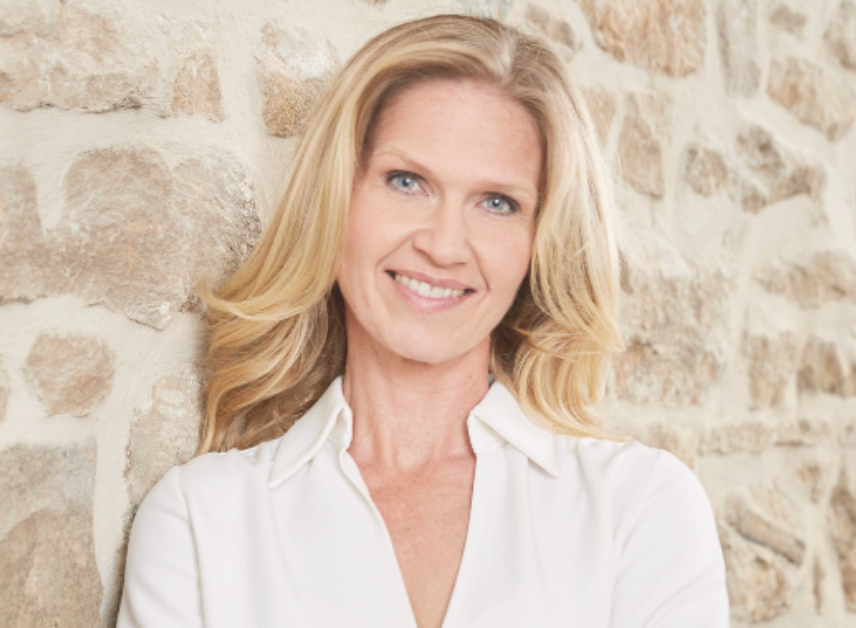
Kerstin von Linden is a journalist and author who works for WDR, among others, and volunteers for the German Board for Therapeutic Riding (DKThR). Photo: kerstinvonderlinden.de
-
Paralympics
- Individual ranking0x
 3x
1x
3x
1x - Team ranking0x
0x
1x
-
World Championships
- Individual ranking0x
0x
1x
- Team ranking0x
0x
1x
-
European Championships
- Individual ranking2x
0x
1x
- Team ranking1x
1x
0x


EQUI PAGES & Cookies
Funktional
Always active
Die technische Speicherung oder der Zugriff ist für den legitimen Zweck, die Nutzung eines bestimmten, vom Teilnehmer oder Benutzer ausdrücklich angeforderten Dienstes zu ermöglichen, oder für den alleinigen Zweck der Durchführung der Übertragung einer Nachricht über ein elektronisches Kommunikationsnetz unbedingt erforderlich.
Preferences
The technical storage or access is necessary for the legitimate purpose of storing preferences that are not requested by the subscriber or user.
Statistiken
The technical storage or access that is used exclusively for statistical purposes.
Die technische Speicherung bzw. der Zugriff erfolgt ausschließlich zu anonymen statistischen Zwecken. Ohne Vorladung, freiwillige Zustimmung Ihres Internet-Service-Providers oder zusätzliche Aufzeichnungen Dritter können die zu diesem Zweck gespeicherten oder abgerufenen Informationen in der Regel nicht dazu verwendet werden, Sie zu identifizieren.
Marketing
The technical storage or access is required to create user profiles to send advertising, or to track the user on a website or across several websites for similar marketing purposes.