July 11 is World Horse Day—how a wild animal became humanity’s most important companion
Reflections on World Horse Day
 from Dominique Wehrmann
 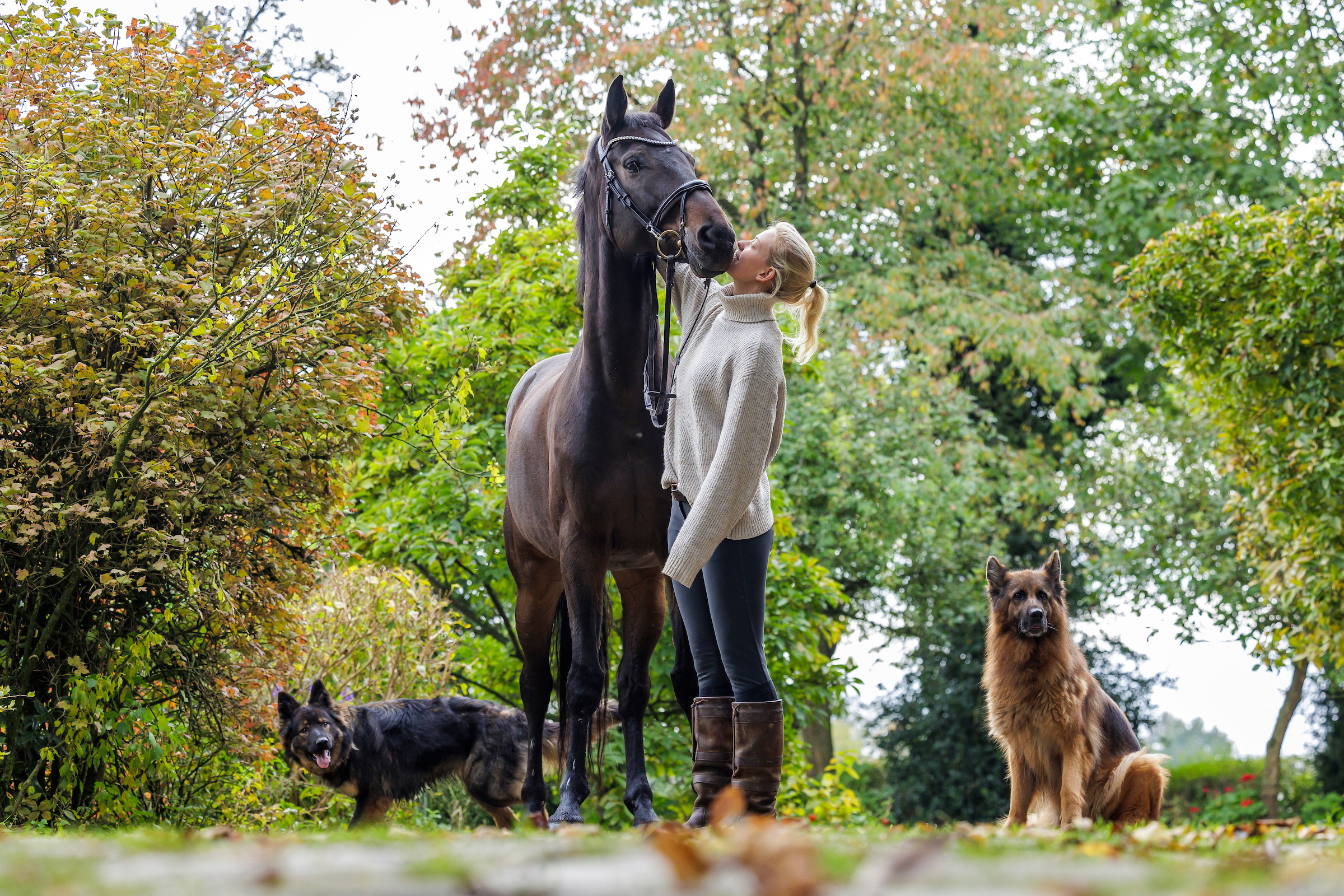 These are Clara Blau and Paul, successful international show jumpers—but above all, friends.
Photo: Sportfotos-lafrentz.de
These are Clara Blau and Paul, successful international show jumpers—but above all, friends.
Photo: Sportfotos-lafrentz.de There are various theories about when, where, and by whom the horse went from being prey to becoming a companion to humans. One thing is indisputable, however: The moment the first human climbed onto the back of a horse was a historic game-changer—a watershed moment for the destinies of both humans and horses. An almost symbiotic relationship developed: The horse opened up new dimensions for humans in terms of mobility, warfare, agriculture, and forestry. Humans, in turn, “shaped” the horse through selective breeding to meet their needs—and have been doing so for millennia, as was demonstrated in 2021 with the help of archaeogenetics.
A Genetic Revolution 4,200 Years Ago
An international research team of 162 members, led by geneticist Ludovic Orlando (CNRS/University of Toulouse) analyzed the genomes of 273 horse skeletons of varying ages from across Eurasia and compared them with the DNA of modern domestic horses—the findings were published in the journal *Nature*. The result: The ancestors of nearly all modern horses lived around 4,200 years ago—that is, from about 2200 BCE onward—in the region around the lower Volga and Don rivers, north of the Caucasus. From there, their genetic profile spread explosively across all of Eurasia within a few centuries—from the Atlantic to Mongolia—thereby displacing all indigenous wild horse lineages, even those previously believed to be the ancestors of domestic horses.
The answer to how this came about is simple: it was due to humans. An analysis of their genetic profiles revealed why these particular horses were chosen: two genes prevailed that were of great benefit to humans—GSDMC, responsible for a stronger back, and ZFPM1, associated with a calmer, more docile temperament. These two factors still determine today whether a horse is suitable as a riding horse or a draft horse. The first instance of selective breeding in human-horse history had taken place.
Used and abused …
Depending on the source, professional associations now list between 200 and well over 400 recognized horse breeds worldwide—ranging from powerful draft horses to lightning-fast, enduring thoroughbreds and athletic warmbloods, all the way to sturdy ponies. According to estimates by the Food and Agriculture Organization of the United Nations (FAO), there are currently around 56 to 61 million horses worldwide. Their characteristics have evolved alongside the roles that humans have assigned them throughout history: The horse has been a work companion, a mount, a comrade in arms, a means of transportation, and, from very early on, a sports partner—the first equestrian competition at the ancient Olympic Games, the four-horse chariot race, was introduced as early as 680 B.C.
Horses were not merely “used”—and in some cases even abused, especially during armed conflicts. Examples from recent history include the two world wars. During World War I, an estimated 14 to 20 million horses were deployed; around 8 million of them did not survive the war—more than half of all the animals used. And horses remained indispensable even during World War II. A 1976 article in *Der Spiegel* reported that 2.75 million horses were forced to serve in the war effort at that time. On average, 865 of them are said to have died each day.
… loved and revered
But horses were not merely victims of humans. There are probably few animals that have been the subject of such a cult as horses. They were loved and revered all over the world. Burial goods, statues, and depictions on works of art have borne eloquent witness to this for millennia. Until the middle of the last century, horses were an indispensable part of everyday life; it was only with the invention of the engine that humans freed themselves—at least in part—from the horse.
Today, horses have new roles that may no longer be essential for human survival, but are nonetheless vital to us: They are partners in sports and recreation, often educators, sometimes therapists, and most often sources of comfort and solace. Horses are good for us. And they are an essential part of our cultural identity. Awareness of our responsibility toward the animals to whom we owe so much has probably never been greater than it is today. And that’s a good thing! We owe these animals a great deal. On this day, it shouldn’t just be those who work with them every day who remember this. Horses don’t need us. But we need them. We have for thousands of years.
P.S.: The reason July 11, of all days, was designated as World Horse Day is rooted in a people for whom the horse remains the linchpin of daily life to this day: the Mongolians. World Horse Day was chosen in reference to Mongolian Independence Day in 1921, which traditionally marks the beginning of the Naadam Festival, a celebration centered on equestrian events.