Interview with DRV Chairman Dr. Carsten Munk on the innovations at the Bundeschampionat
What the German Judges’ Association thinks about the new national championship format
 from Dominique Wehrmann
 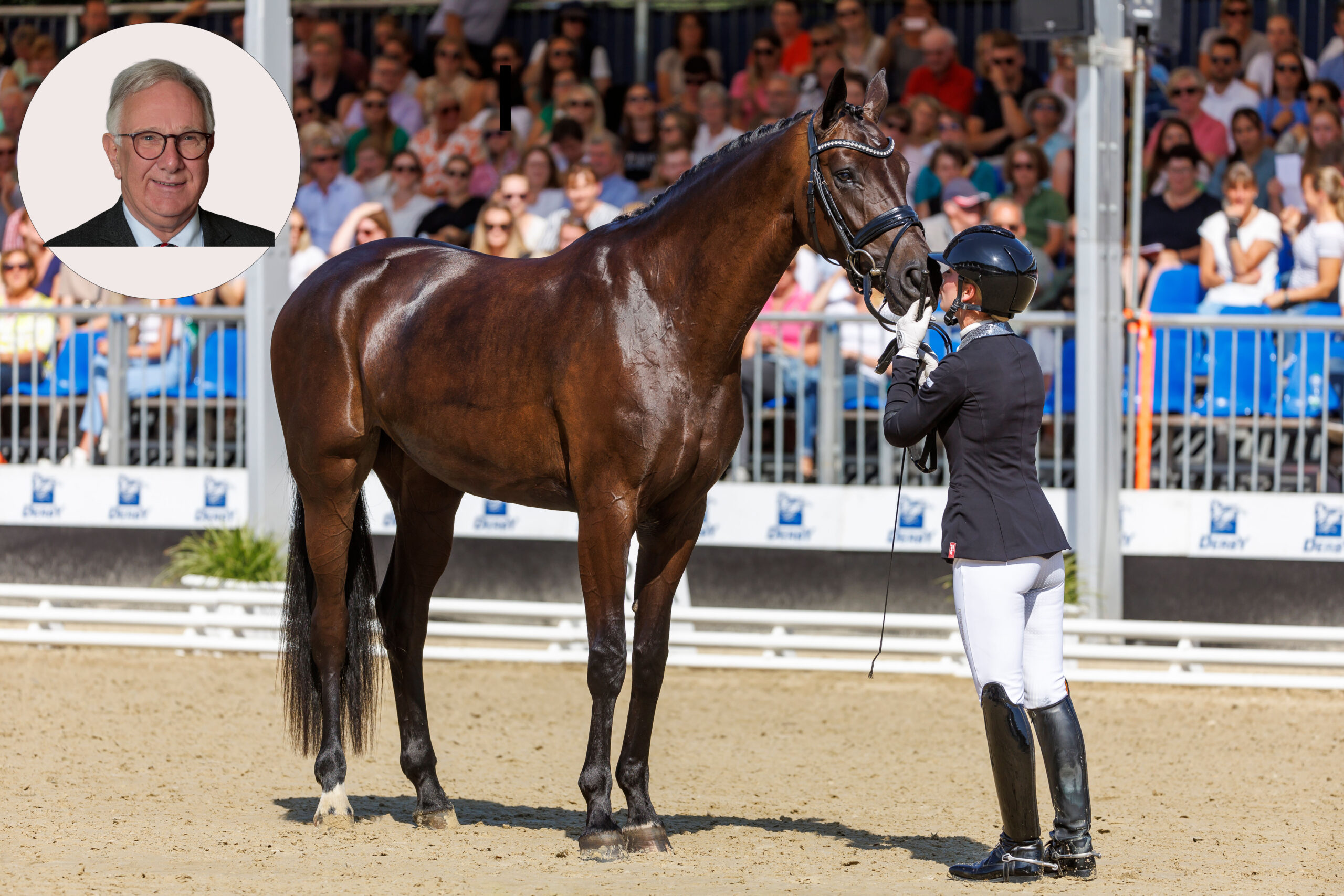 Symbol photo: sportfotos-lafrentz.de/FN/M. Kaup
 Dr. Munk, to what extent was the German Judges’ Association involved in the decisions regarding the changes to the riding horses at the Bundeschampionat and who was involved at all?
Representatives of the German Judges’ Association (DRV) were invited to the Young Horse Summit on February 5, 2026 in Warendorf as well as to the working group “Changes for 3- and 4-year-old riding horses at the Bundeschampionat”, which was convened once afterwards. The objective of these events was set by Equestrian Sport Germany (German Equestrian Federation (FN)) that changes in the riding horse arena should be discussed and decided in the interests of animal welfare in order to prevent or at least curb the sometimes harsh criticism of the young horse tests on social media.
In the introduction to the Young Horse Summit, the participants were informed that due to a sensible limitation of the number of participants, the breeding associations could only be invited in limited numbers and representatives of the state associations had to be omitted completely. Otherwise, a representative selection of horse people should be present. As I understand it, the group of participants was quite heterogeneous: there were riders, trainers, stallion owners, breeders and national trainers present. However, I am not familiar with the selection criteria of Pferdesport Deutschland in detail.
The representatives of the DRV made their comments on the various proposed changes, but also expressed their rejection of the proposed changes to the procedures and judging criteria in the tests for young riding horses. The DRV subsequently sent a detailed letter to Pferdesport Deutschland once again expressing its concerns and rejection in this regard and, in particular, pointing out the consequences of these changes for judging and judges’ training. A reply to this letter dated 02.03.2026 is still pending. This criticism by the DRV was then repeated in various online meetings with Pferdesport Deutschland.
Are the changes even LPO-compliant?
The LPO stipulates for the riding horse tests under § 305 “Requirements and Evaluation” that the “presentation of the horses under the rider in groups of up to three horses and in hand (without saddle) (!) must be carried out in accordance with the riding task booklet. The natural movements of the horse in the three basic gaits (…) as well as rideability, type and quality of conformation are to be assessed.” A total of five individual marks are to be awarded, whereby only whole and half marks may be awarded in accordance with the LPO. However, it should now also be possible to give the marks in decimal places.
Your question about LPO conformity should correctly be supplemented by the question of conformity with the “Riding Horse Tests Leaflet” and conformity with the “Riding Horse Tests Judge’s Card” currently valid according to the LPO/Leaflet. At this point, it should be noted that the currently valid information sheet and the currently valid judges’ card with the guiding principles listed therein were developed by the DRV in close coordination with the FN.
To answer your question: LPO conformity is actually not given at many and, in our view, very important points! Furthermore, there are also significant deviations from the basic explanations in the information sheet for riding horse tests. In this respect, a unanimous (!) resolution was passed at the DRV General Assembly on March 21, 2026 that the riding horse tests at both the state and national championships must be carried out in accordance with both the LPO and the information sheet. The DRV has also made this demand to Pferdesport Deutschland!
Equestrian Sport Germany intends to circumvent this lack of conformity by declaring the riding horse tests at the Bundeschampionat as a “pilot project” for the sake of simplicity.
One of the most drastic changes is the abolition of conformation judging by hand. How do you feel about this?
We should no longer use the term conformation here, which actually has a slightly different meaning in breeding, but the established terms “type and quality of conformation”.
The presentation of the horses in the riding horse test at the national championships as well as at the state and association championships is now to take place exclusively (!) under saddle. The previous fifth mark “Assessment of type and quality of conformation” will now also be replaced by the characteristic “Overall impression as a riding horse”. The very meaningful type assessment as one of the main areas of assessment is thus completely pushed into the background.
This last mark “Overall impression as a riding horse” is therefore primarily a summary of the respective movement and riding quality and thus unjustifiably relegates the body quality of a horse to a subordinate priority. The fifth mark should therefore be reserved for the assessment of type and quality of conformation as the sole characteristic and must not be watered down by adding an overall impression!
The downgrading of the value of body quality under the new judging system is further emphasized by the fact that although it is possible to assess the horses in a standing position at the end of the test (in a non-saddled state!), the judges must instruct them to do so if necessary. The body quality is therefore “normally” to be assessed by the judges as they ride past.
However, the guiding principles of riding horse points and body quality, which have been adopted in the new judging card, cannot be assessed in detail with this required procedure and now require clairvoyant abilities from the judging group!
This banishment of the assessment criterion of type and quality of conformation to near insignificance, and then in combination with overall impression, is a serious professional mistake that not only turns our breeding principles on their head, but also the basic principles of riding horse assessment that have been passed down through generations. This completely disregards the fact that body quality has a decisive influence on a horse’s suitability for sport and health, and that the quality of the basic gaits and riding qualities are highly dependent on body quality. It is precisely the judge’s task to recognize and evaluate the physical functions of a horse – in conformity with the horse’s interior! – to recognize and evaluate. Under no circumstances can the assessment of body quality be restricted in this way, as intended! The DRV has also spoken out strongly against this!
The considerable increases in performance achieved by our horses in recent decades, their fundamental improvement in riding qualities and their movement qualities as well as their overall appearance in terms of their type characteristics have been achieved by breeding through improvements in body quality! The equestrian sport should recognize this progress and keep it in focus!
I would also like to point out that Pferdesport Deutschland’s decision not to assess the type and quality of conformation when the horse is unsaddled and to evaluate it virtually as it passes by was justified – it is hard to believe – by a reduction in the time horses spend in the riding arena and the resulting improvement in horse welfare!
However, the guiding principles of riding horse points and body quality, which have been adopted in the new judging card, cannot be assessed in detail with this required procedure and now require clairvoyant abilities from the judging group!
What do you think of the redefinition of the rideability score as an assessment of the horse’s “riddenness”? And how exactly do you differentiate between the horse’s natural disposition and what the rider gets out of a horse?
In the print media, Pferdesport Deutschland had previously announced that the focus of the assessment of rideability should be on the age-appropriate presentation of the horses. However, as the main focus of the riding horse test is to assess the quality of a riding horse, the rider’s presentation – especially if this is deficient – should not be ignored, but should not be the actual aim of the assessment.
In recent years, immediately before the start of the Bundeschampionate, all participants in the riding horse tests were given a briefing on the test arena, during which the requirements for the preparation and presentation of the horses on the test arena were also defined. In particular, points worthy of criticism, which could even lead to disqualification, included forced riding with unnatural action, unnatural bridling, presentation at an inappropriate speed, sustained impermeability and an unsmooth seat. The group of judges also had the opportunity to issue appropriate warnings during the test.
Especially in the social media, the posture of the horses (contact) in the riding horse test is often generally criticized as not appropriate for their age. In the new judges’ card designed by Pferdesport Deutschland for the rideability score, the term “age-appropriate contact” is now also used as a guiding principle.
But what is an “age-appropriate contact”? Our riding theory defines the posture to be adopted by a young horse that is still going without a degree of collection as “going in contact”, whereby not only the connection between the rider’s hand and the horse’s mouth is explicitly meant, but also its head/neck posture and the rest of its frame. However, this head/neck posture should not be formed schematically according to the age of the horse, but in relation to its movement sequences and depending on the structural conditions of its conformation.
For example, a horse that naturally moves actively uphill at trot and canter with its hindquarters reaching deep and far forward in a clearly closed manner must inevitably be able to present itself in a different posture than a horse with a more or less horizontal movement sequence. Demanding a “standardized” posture – based solely on the age of the horse – from horses with such an uphill movement sequence inevitably leads to impairments in the movement sequence. Please do not misunderstand me: I am not advocating a misunderstood bridle/erection, but I am trying to make it clear that the posture to be adopted by the horse does not necessarily have to be age-related and schematic, but must be designed individually depending on the respective movement sequence and physique. In this respect, I believe that the term “age-related” is misused. It should also be borne in mind that the posture of even three and four-year-old horses changes continuously as training progresses and should not remain statically “conserved”.
In our leaflet for riding horse tests, we define rideability/riding qualities in terms of movement characteristics (e.g. natural consistency, activity of the hindquarters, activity of the back, etc.), posture characteristics (e.g. body conformation from the flow of movement from the hindquarters to the rider’s hand, steady and soft contact, balance, etc.) and temperament characteristics (balance, attentiveness, sensitivity and reaction to aids and influence, etc.). The eye of the evaluating judge must concentrate on this multitude of characteristics, whereby the contact and the reins-out-of-hand-chewing, which is often used as almost the sole characteristic, only represent a partial aspect of these overall characteristics.
Your question about a separation between natural disposition on the one hand and riding (or training) performance on the other is not easy to answer. One thing must be clear: the fourth mark “rideability” must still not be a mark for training!
Horses that can be presented, for example, with a good closed movement, active hindquarters and a supple flow of movement over the back can be assumed without hesitation to have positive riding qualities in this respect. However, it is also clear that such positive characteristics can only be called up by a supple and confident rider – if they are also present in the horse! In this respect, there is of course an interaction between rider and horse.
How could it be possible to reward horse-friendly performance more and thus create incentives for training appropriate to the horse’s age?
As already mentioned above, a presentation that is not appropriate for the horse will be penalized by reducing one or more marks up to the possibility of disqualification of the participant. Conversely, a presentation that is judged positively will not only have a positive effect on the “harmony” characteristic in the assessment of movement and riding quality. In this respect, the “horse-friendly presentation” with its corresponding effects on the quality of movement and riding will definitely be rewarded. I assume that the riders, trainers and breeders are aware of this and that the riders design their presentation accordingly.
I do not agree with the opinion that the training is generally not appropriate for the age of the horses. However, I also concede that there are, unfortunately, a small number of exceptions. However, the “products” of these activities are not the ones that excel in tests for young riding horses!
In my opinion, the problem with inadequate training is that the horses – to a small extent – are put to work too early and inappropriately and are sometimes overtaxed physically.
Together with Pferdesport Deutschland, we as the DRV have tried to take these tendencies into account: According to the LPO, three-year-old horses may only be used from May 1st of the current year and only in basic tests (familiarization tests or riding horse tests). The external rider test at the Bundeschampionate was abolished in order to protect three-year-old horses; this is now also to be abolished for four-year-old horses. Since last year, the three-year-old horses have not been required to lengthen their stride, and this year the use of three-year-old horses at the Bundeschampionate is to be reduced to one test. The rideability tests have been shortened with changes to the task booklet and their requirements have been adapted to the age of the horse. All of these changes were and are a contribution to the promotion of animal welfare.
The warm-ups for all age groups at many events and also at the Bundeschampionat can also be welcomed, as they ensure that the horses are much more relaxed.
As you can see, Pferdesport Deutschland and the DRV are making every effort to make changes that will lead to an improvement in the welfare of young horses.
However, one must be critical when changes are made against the traditional principles of riding or against the principles of judging. I consider the propagation of other riding styles, other seat forms and other postures of the horse in the riding horse test to be completely superfluous! Our way of riding according to the traditional principles is still practiced animal welfare!
They had campaigned for the abolition of the external rider test for three-year-olds. Now there is also no longer a riding judge for four-year-olds. What do you think about this?
I think the reasons for the abolition of the third-party rider test for three-year-old riding horses can also be applied to the same extent to the abolition of this test for four-year-old horses. The knowledge gained from the external rider in terms of rideability must be set in relation to the additional stress placed on the horses by this test and the overall stress during the Bundeschampionate. Experience in recent years has shown that there was generally good agreement between the observations of the judging panel and the external rider. In this respect, I personally welcome the decision not to carry out this test, which is also intended to protect the four-year-old horses.
Instead of the riding horse test for four-year-olds, they will soon be competing in an advanced (A) level dressage horse test. How do you feel about this as a judge, but also as a horseman?
I have a somewhat ambivalent opinion on this. The finalists for the novice class dressage horse test are determined via a riding horse test with the judging criteria on which it is based. The novice class dressage test for young horses, on the other hand, has its own, different criteria, which only partly correspond to those of the test for young riding horses. In my opinion, however, the finalists should again be judged according to the same evaluation criteria as in the preliminary test.
Those in favor of the novice class dressage test for young horses as a final test have argued that this test does not involve any increase in the demands placed on the horses. I disagree with this.
For me, it makes a difference whether a young horse has to complete a task with fairly simple lines in a group and riding behind each other or now has to master a task alone with undoubtedly higher demands, especially in terms of permeability. To make matters worse, light trotting in the test for young riding horses in the working trot is now being replaced by sitting out in the test for young dressage horses.
The assessment criteria in the novice class dressage horse test have increased in comparison to the riding horse test: Whereas in the riding horse test the characteristics of movement quality, riding quality/rideability and body quality are to be assessed, in the dressage horse test, where body quality is not assessed, it must also be decided whether the quality of the basic gaits meets the requirements for a novice class dressage horse, whether the horse is on the right track in terms of training, taking into account the points on the training scale, and whether the horse has positive prospects for further dressage sport. These requirements are in fact a more extensive addition to the riding horse test.
Following the planned pilot project, it will be necessary to examine very carefully whether the change from a basic test (test for young riding horses) to an advanced test (class A test for young dressage horses) is justified within this field of participants or whether other horses should be placed at the front as a result of the different assessment criteria.
Apart from the sporting and technical concerns, the purpose of the measures was to focus more on animal welfare at the Bundeschampionat. Do you believe that this will be achieved through the innovations? If not, what could/should/must be done from your point of view?
I think we have to make sure that the efforts to bring about change do not become an end in themselves. The changes to the framework conditions that were considered at the Bundeschampionats (limiting the use of three-year-old riding horses, warm-ups on the competition arena, removal of the standing area grandstand, etc.) can certainly contribute to improving animal welfare; however, whether they were perceived as such improvements by the general public and, above all, by the participants, would have to be reviewed after the event.
I do not believe that the test conditions need to be made even more effective in order to improve animal welfare. On the contrary, we as DRV are of the opinion that the technically incomprehensible intervention in the test concept of the riding horse test should be reversed and returned to LPO and information sheet conformity.
Dr. Carsten Munk

Dr. Carsten Munk, who holds a degree in geology, rode dressage, show jumping and eventing in his youth until he decided to concentrate on dressage, where he achieved success up to advanced level. He became a judge in 1988. In 2021, he took over the chairmanship of the German Judges’ Association. He has not only judged horses in a sporting context, but also for their suitability for breeding as a licensing inspector.
Ähnliche Beiträge