How the coat change is controlled in horses - annual rhythm, light and coat development
All about the change of coat in horses
 from Kerstin Wackermann
 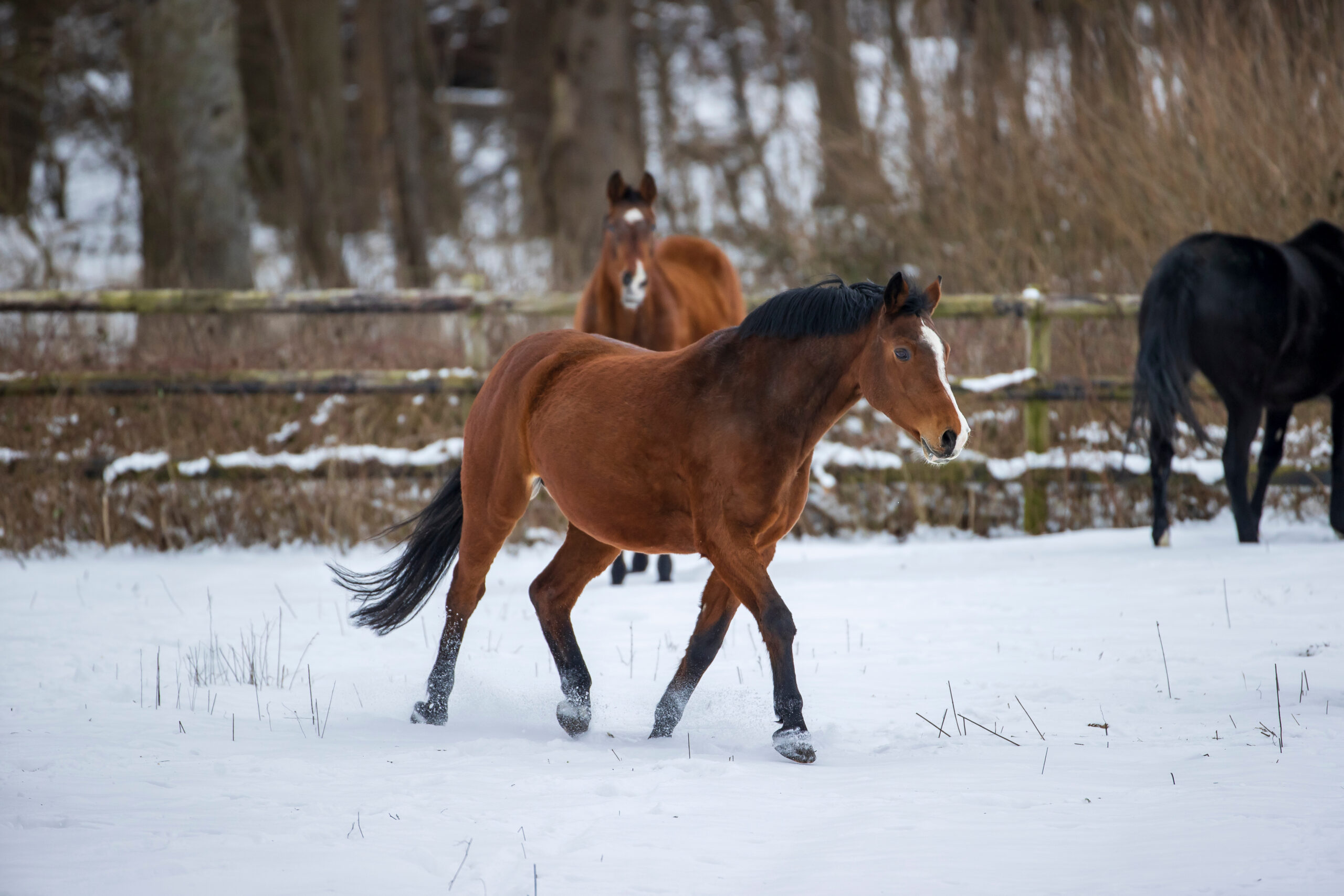 In healthy horses that are mainly kept outside, the body forms a winter coat that normally gets them through the cold season without an additional blanket. Photo: sportfotos-lafrentz.de
 The change of coat begins in the body long before it becomes externally visible. It follows a fixed biological rhythm. Light sets the pace, weather, posture and bedding determine how thick the coat becomes.
When does the change of coat begin in horses?
Horses begin to build up their winter coat in late summer – usually unnoticed. The hair gradually becomes longer and a dense undercoat of many fine woolly hairs forms under the top layer. This structure protects against the cold because air heated by the body is stored between the hairs and acts as a natural insulating layer. If horses lose a lot of heat, for example because it is very cold, they can increase this effect. Each hair is connected to the skin via a small muscle. If this muscle contracts, the hair straightens up and more air is trapped between the hairs. If the hairs stick out further – which can be clearly seen on some horses in winter – a thicker layer of air is created directly above the skin. The more air that remains “trapped” in the coat, the better it keeps warm.
If a horse is shorn, it loses a large part of this natural insulation. Shorn animals are therefore more sensitive to cold, rain and wind, but dry more quickly after training. In sporting use, this can make sense if you always use the right rug to compensate for the coat’s lack of insulation.
The change from winter to summer coat also begins much earlier than many people expect. From January, as soon as the day length increases again, the body hormonally switches to summer coat. Strictly speaking, the phase that many people refer to as the coat change is only the final step: between February and April, the horse sheds its thick undercoat and long winter hair. The new short, smooth summer hairs have already formed by this time. They are close-fitting and allow the horse to release excess heat more quickly in summer and cool itself through evaporation.
Light, temperature and covering – what controls the coat change and what doesn’t
The photoperiod, i.e. the duration of daylight, controls the coat change. Experiments with light programs have shown that horses have a longer summer coat if the length of the day is artificially extended. However, this is only successful if intervention takes place very early. If the body has already switched to a winter coat, the system only reacts to a limited extent: The process can be slowed down, but not stopped completely.
Temperature and heat balance then determine how thick and insulating the winter coat is. If a horse wears a blanket, it loses less heat. The winter coat is then often less thick. The extent of this effect varies from horse to horse(read more).
Thermoregulation: it all depends on the weather
The winter coat reliably protects horses in dry cold weather. The insulating layer of air between the hairs keeps the body heat close to the skin. However, this protection only works as long as the coat remains dry and the wind does not destroy the layer of air. In rain or strong winds, even thick winter coats lose some of their insulating effect. Horses then cool down more quickly and show signs of discomfort more frequently. Observational studies confirm this experience from everyday stable life: dry cold is usually well compensated for, while wet and windy conditions are more stressful for horses ( Mejdell CM et al. 2020).
What role do breed, age and husbandry play in the change of coat?
Husbandry, breed and age influence how pronounced the winter coat becomes – not when the change of coat begins.
Horses that live mainly outside lose more heat than stabled animals due to wind, moisture and temperature fluctuations in fall and winter. Their body reacts to this with a more functionally insulating winter coat. Horses in stables are hardly exposed to wind and wet conditions. Their winter coat is therefore often shorter and less dense.
Regardless of the breed, there are clear breed-specific differences. Warmbloods generally have a shorter coat in winter. Ponies and robust breeds produce significantly more undercoat. These differences are due to genetic adaptation to different climatic conditions and are influenced by body shape and metabolism.
Age also plays a role. Older horses often change their coat more slowly and unevenly, especially in spring. If there are serious abnormalities here, you should check whether this is still age-related or whether health-related causes are playing a role.
Metabolic problems: PPID (Cushing’s disease) and other causes of impaired coat metabolism
Delayed or incomplete shedding may indicate hormonal changes. Horses with Pituitary Pars Intermedia Dysfunction (PPID) often retain a long, dense coat. In many cases, the coat is shed only slowly, with individual coat plates remaining even though the days are already getting longer. In addition, seasonal alopecia occasionally occur – limited, mostly harmless bald patches that close again in the course of the season.
Zinc, copper and amino acids: How do I support my horse during the coat change?
The formation of new hair requires sufficient energy, high-quality protein and certain trace elements – especially zinc and copper. This need arises long before the horse visibly sheds, as the new hair first grows under the skin and gradually pushes the old hair outwards.
Young, healthy horses usually manage the shedding process without any problems. In older animals or horses with limited reserves, the process can be prolonged. If the supply of energy and nutrients is insufficient, the shedding process can be prolonged or uneven. In such situations, readily available amino acids and trace elements such as zinc, copper and manganese are important because they are involved in the formation of new hair. Omega-3-rich oils can also support the skin metabolism during this phase.
Whether targeted supplementation makes sense can only be assessed on the basis of the overall ration. As trace elements in particular can easily be overdosed, a ration analysis should be carried out before each supplementation.
FAQ – Frequently asked questions about the change of coat in horses
Does the change of coat affect the immune system?
The change of coat challenges the organism because new hair is formed and the body adapts to changing temperatures at the same time. This extra work requires energy and nutrients. Older animals or horses with pre-existing conditions in particular appear more tired or react more sensitively during this time.
How can I recognize shedding problems with PPID/Cushing’s?
Typical symptoms are very late or incomplete shedding, long winter coats and individual fur plates in spring. Changes in the hair structure or increased sweating are also common.
Is it normal for my horse to lose hair in the middle of winter?
Yes, the hormonal changeover to a summer coat begins with increasing day length, regardless of the temperature. Some horses react particularly sensitively to light stimuli and lose individual hairs early on.
What to do when the coat change stops?
A slow change of coat often indicates inadequate care or health factors. Hay quality, ration structure, husbandry and lighting conditions should be checked. If the coat does not change despite good care, a veterinary examination is advisable.
Why does my horse lose weight during the coat change?
The change of coat increases the energy requirement. Horses with few reserves or older animals quickly fall into a deficit. Weight loss, a dull coat or delayed shedding are typical signs. Here too, it helps to check the feed and have the horse’s health checked.