Recognizing and assessing hay quality – what horse owners need to look out for
 from Kerstin Wackermann
 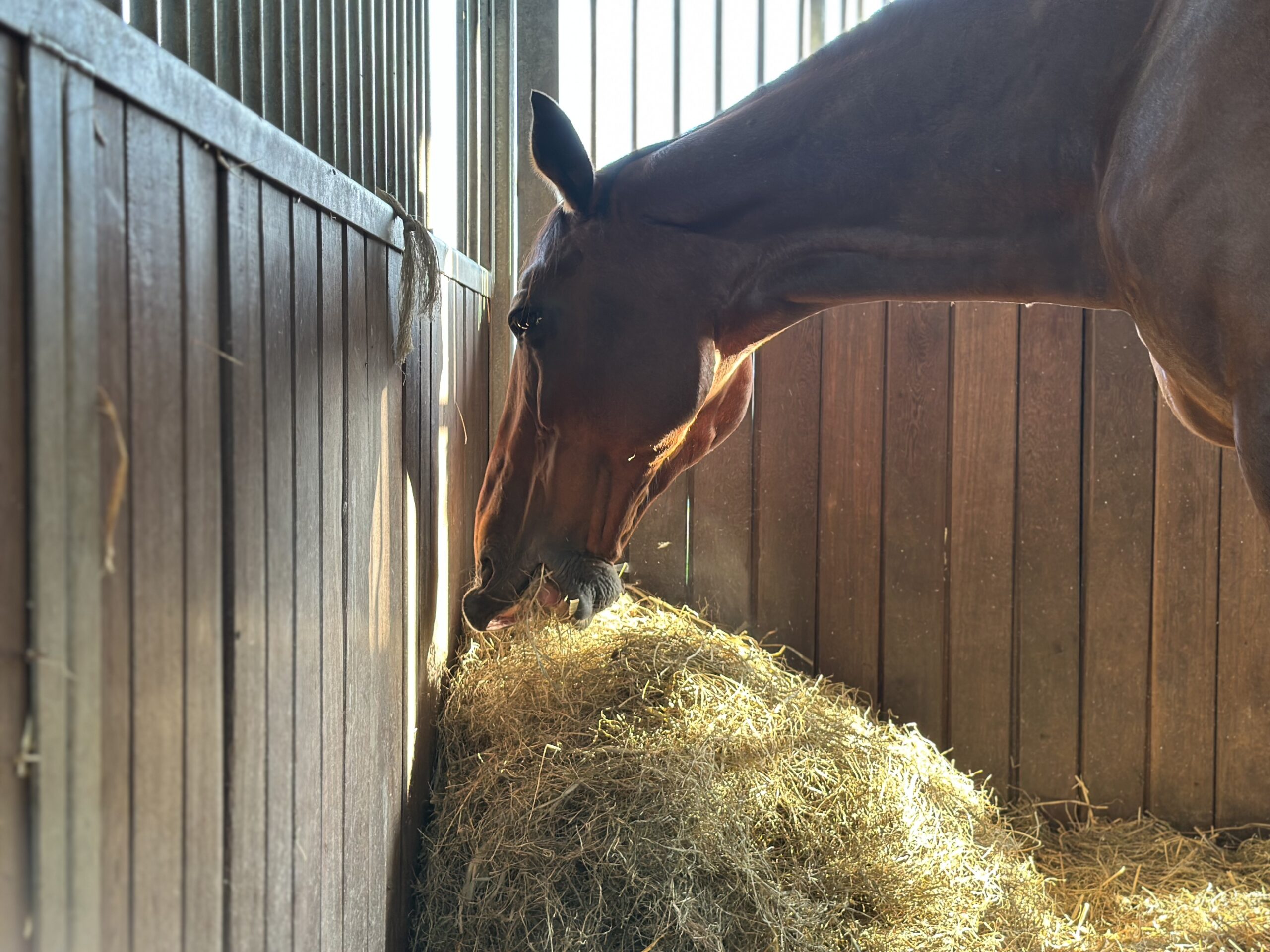 Good hay is rich in structure but not too hard, green in color and smells of herbs.
 Good basic feed is the basis of every ration calculation. The guidelines for the assessment and use of horse feed (FN, 2014) emphasize this: A ration can only be considered balanced if the basic feed is flawless. Poor quality hay endangers health in the long term – a risk that can be avoided with a little knowledge and routine.
How can you recognize good hay with the naked eye and nose?
The assessment of hay begins with the senses: Color, smell and structure provide a reliable first indication of hay quality. Good hay is uniformly greenish to golden yellow, never gray or brownish. It smells fresh, slightly aromatic, but not sweet or pungent. Even slight odor deviations indicate mold or the onset of incorrect fermentation.
LUFA Nord-West points out that a simple odor test often reveals abnormalities more quickly than a visual inspection alone. Anyone who notices a dull, damp smell when opening a bale should be careful: Mold may have already formed in such areas, even if nothing can be seen on the outside.
Dust formation is also a warning signal. No fine clouds should rise when shaking the hay. Dust is caused either by mechanical crumbling losses in over-dried hay or by microbial decomposition in excessively moist hay – both of which impair feed hygiene.
In addition to color and odor, foreign matter is another criterion. Stones, soil, pieces of metal or poisonous plants indicate inadequate field hygiene. Such impurities can get into the forage during mowing or swathing. They not only increase the risk of injury, but also reduce the nutritional value.
What structure should hay for horses have?
The structure describes the mixture of stems, leaves and fine particles. It influences how long the horse chews, how much saliva is produced and how well digestion takes place. Hay from the first growth usually contains more stems and crude fiber and promotes chewing and digestion due to its coarser structure. These properties are particularly beneficial for horses that feed lightly and are sensitive to metabolism.
The second cut is finer and leafier. It usually contains a little more energy and protein, but less crude fiber. Such hay is soft and easy to chew – usually ideal for older horses, foals or animals with dental problems.
Why is a hay analysis essential?
Even experienced horse owners cannot reliably estimate protein, sugar or energy content. A laboratory analysis is the only way to determine the actual feed value. Laboratories such as LUFA Bayern and LUFA Nord-West offer standardized analyses for hay and silage.
Among other things, crude protein, energy content, crude fiber content, sugar (ESC/NSC) and minerals are analyzed. The NSC value is particularly important. If it is above around ten percent of the dry matter, the risk of laminitis and insulin resistance increases, as studies have shown. This value is particularly important for horses with metabolic problems or little exercise.
How to take a hay sample
Sampling should be done carefully. Take at least ten to twenty bales of hay, cut it into small pieces (approx. 10 centimeters long), mix it and then take about 300 grams from this mixture. Pack it in a paper bag and send it to the laboratory. This is the only way to make a representative assessment of the entire delivery. It makes sense to repeat such analyses regularly, especially if the cut or storage conditions have changed.
How do you store hay correctly to maintain its quality? You can find all the information here.