
Influenza vaccination requirements for competition horses in Germany are to be brought into line with FEI regulations

LPO Update – Will Mandatory Influenza Vaccinations for Tournament Horses No Longer Be Required Every Six Months?

Scene
The mandatory influenza vaccination requirement is to be brought into line with international regulations.
Photo: sportfotos-lafrentz.de The mandatory influenza vaccination requirement is to be brought into line with international regulations. Photo: sportfotos-lafrentz.de
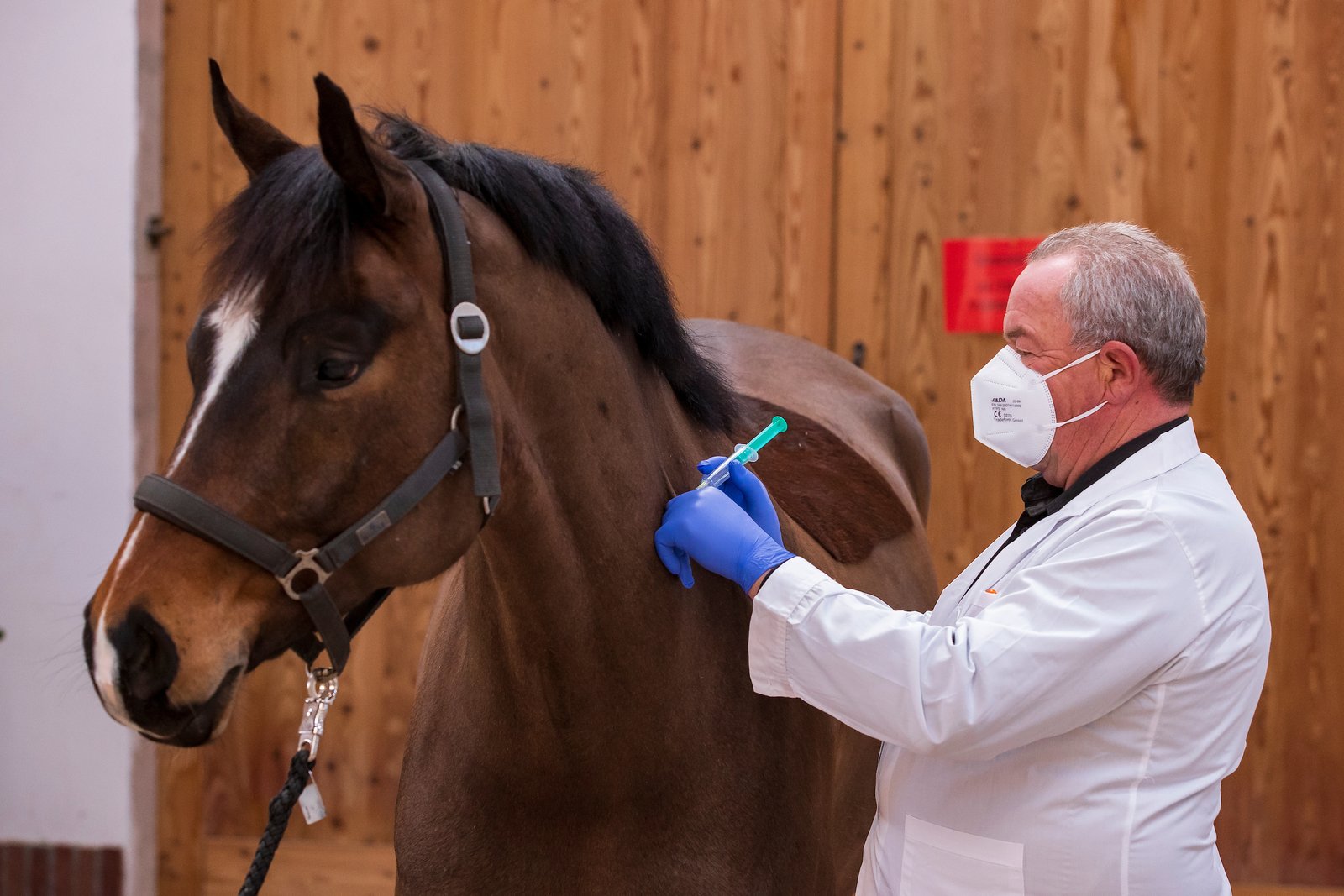
The FN plans to align Germany's mandatory influenza vaccination requirements with international regulations in the LPO 2027. What that would mean.

Section 66, “General Restrictions on Horse Participation” (1.7), of the Performance Testing Regulations (LPO) stipulates that only horses vaccinated against influenza may participate in competitions, and the Implementation Regulations stipulate that this vaccination must be renewed every six months (plus a maximum of 21 days).


Now, the Society for Equine Medicine has issued a statement announcing that this regulation is to be amended and criticizing the proposed changes—though, as with all amendments to the LPO, the Sports Advisory Board must still vote on them. Here’s the background.


Why vaccinate every six months?


The FN itself explained the currently still-in-effect mandatory six-monthly vaccination against equine influenza in PM Forum 8/2019 as follows:


“Studies have shown that after six months, the level of protective antibodies decreases to the point where the horse is no longer adequately protected against an influenza virus infection. If the horse then comes into contact, for example, with a horse infected with influenza, there is a risk that the number of antibodies in the horse’s body will be too low to fully combat the invading viruses. The number of viruses in the body is therefore higher than that of the antibodies fighting them. Only with booster shots administered every six months is the horse protected both from infection with the virus and from the development of clinical signs.”


It goes on to explain that the LPO follows the recommendations of the Standing Veterinary Vaccination Commission (StIKoVet), which—even in its most recent 2025 version—recommends semiannual vaccination for competition horses. Only “for horses with a lower risk of influenza exposure that are regularly vaccinated and are not used in competitions or other events involving large gatherings of horses from different herds (e.g., breeding events, trail rides), an interval of up to 12 months may be sufficient,” according to StIKoVet.


StIKoVet: Vaccination regulations should not be watered down


StIKoVet has already outlined this position in a 2017 statement on influenza vaccination, in which it states, among other things:


“From the StIKoVet’s perspective, based on the available data, there is no doubt that the vaccines meet the efficacy criteria specified in the indication for the stated duration of immunity and result in milder clinical signs and reduced viral shedding in individual vaccinated animals. However, based on the available infectious-immunological data and experience from past EIV epidemics, it can be assumed that the risk of further epidemic spread of the virus increases significantly six months or more after the last booster vaccination.”


The conclusion of the last two sentences is: “Thanks to these strict vaccination regulations, there have been no widespread EIV epidemics in Germany to date. This should not be watered down.”


The body of research and the history of influenza outbreaks over the past few decades confirm this; you can read about it in detail here.


Policy Change


: It is precisely this relaxation—the very one that StIKoVet warns against—that is now under debate. Starting January 1, 2027, the LPO regulations are to be aligned with the FEI regulations. These stipulate that horses taking an extended break from competition need only be vaccinated against influenza once a year, but no later than six months and 21 days before their next competition. In practice, this means that horses competing in tournaments throughout the year must continue to be vaccinated every six months (+21 days).


A statement from the FN was scheduled for Thursday, November 19. We received the following information from the association today: “Regarding the ongoing consultations on planned amendments to the LPO, the Sports Advisory Board has decided to suspend the process for the time being. The reason for this is to discuss certain issues in greater depth.” When asked what exactly these “certain issues” are, the association stated that it could not provide any information at this time.


Warning Against a Decline in Vaccine Protection


We asked Dr. Michael Köhler, president of the Society for Equine Medicine, for his assessment. In addition to this volunteer work, Dr. Köhler is the founder of the Wusterhausen Equine Clinic. He also works as a competition and racetrack veterinarian and serves as the “FEI Head Veterinarian” for the FN. Köhler says he views the new regulation “as a step toward the spread of the disease among the German horse population, as it weakens the effective vaccine protection.”


He explains that there was some debate when the mandatory semiannual vaccination requirement was introduced—but he also recalls why the decision was ultimately made in favor of the regulation: “Even back then, it was clear that the vaccinations prescribed at 12-month intervals in the approval conditions for the vaccines available on the market were insufficient for a population of horses that are constantly coming into contact with other horses.” The Standing Committee on Vaccination in Veterinary Medicine (StIKo-Vet), which was established later, confirmed this and also codified it in the “Equine Vaccination Guidelines.” Köhler is convinced: “Since even horses not used in sports were vaccinated under the same system, large-scale outbreaks of this virus have been avoided in our country.”


The GPM president draws on his experience as a veterinarian: “I am also heavily involved in the management of international equestrian sports. As a result, I am aware of fairly frequent outbreaks in countries that are implementing the newly proposed vaccination regulations against the equine influenza virus.”


He also acknowledges that the new regulation would be sufficient if, for example, a rider only competed with his horse in tournaments during the summer. However: “That would mean that during the winter months—when the risk is greatest—vaccination protection would be at its lowest.”




Anzeige
Anzeige
Anzeige
Advertisement


Rethinking the 7-Day Rule


Dr. Michael Düe, former head of the FN’s Department of Veterinary Medicine and now back in practice as a veterinarian, sees the biggest problem with both regulations elsewhere entirely: namely, in the requirement that the waiting period between the second vaccination and the start of competition is only seven days. In this short time, the vaccinated horse’s body has not yet been able to recover sufficiently from the vaccination. After all, this exposes the horse to the very viruses against which it is supposed to produce antibodies. Stress and premature exertion can lead to the very disease one is trying to prevent actually breaking out.


Similar posts

Federal Association of Veterinarians: Maintaining and Increasing the GOT Is “Inevitable”
Federal Association of Veterinarians: Maintaining and Increasing the GOT Is “Inevitable” Read More
Book Recommendation: “The Whole Story—Cornet Obolensky—25 Years of Breeding and Competition”
Book Recommendation: “The Whole Story—Cornet Obolensky—25 Years of Breeding and Competition” Read More
Janne Friederike Meyer-Zimmermann and her husband, Christoph Zimmermann, are becoming riding school operators
Janne Friederike Meyer-Zimmermann and her husband, Christoph Zimmermann, are becoming riding school operators Read More
WP Wehrmann Publishing